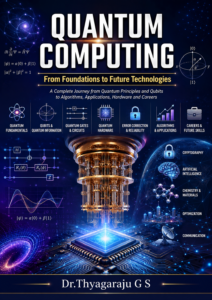
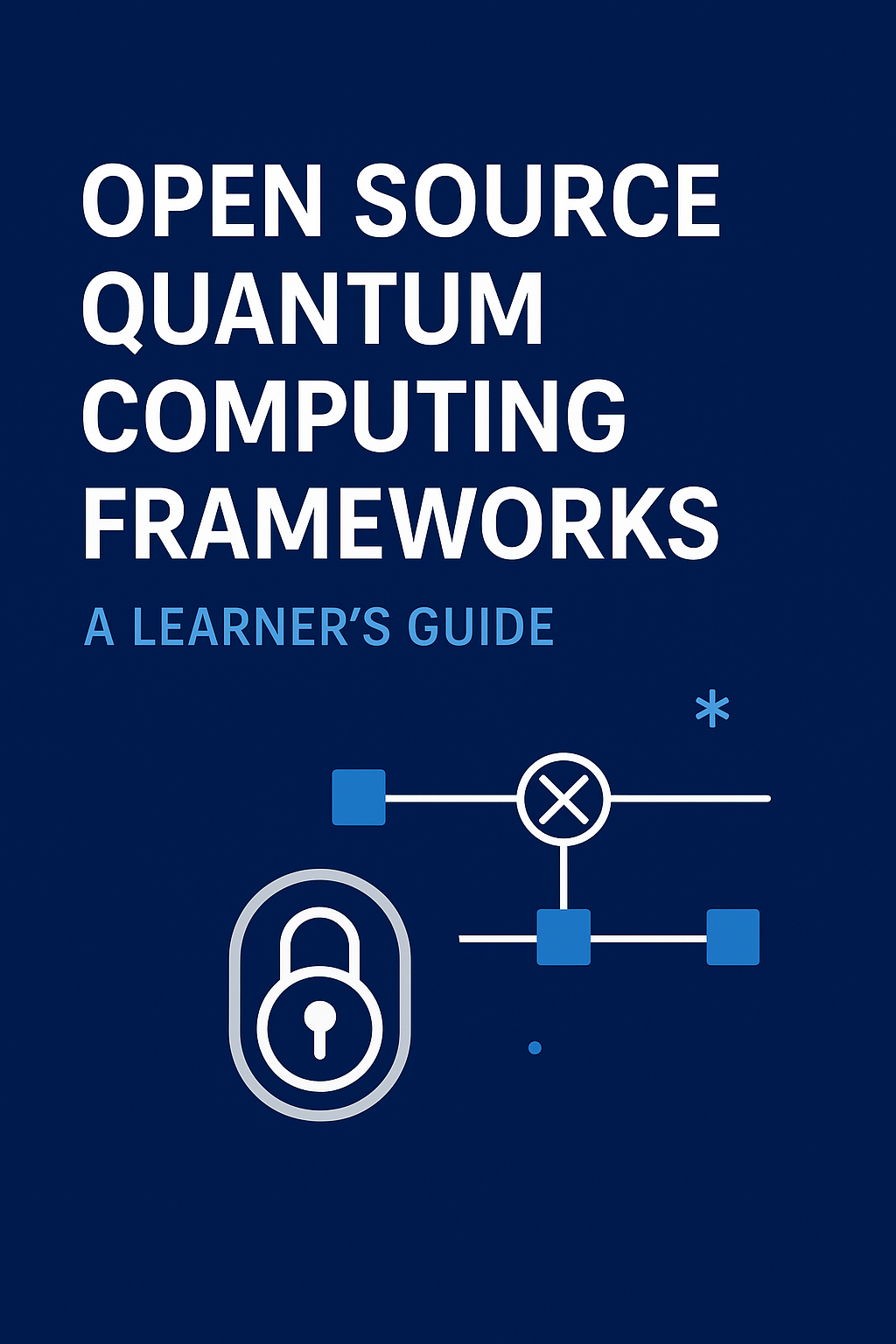
Quantum computing is rapidly evolving from a scientific concept to a programmable reality, thanks to open-source software frameworks. These tools allow anyone—from students to researchers—to build, simulate, and execute quantum algorithms without owning a quantum computer.
This guide introduces learners to the most important frameworks, explains why open source matters, and highlights the challenges and opportunities shaping the field’s future.
1. Understanding Open Source Quantum Computing
1.1. Why Open Source Matters
Open source means that the source code of a software project is freely available for anyone to use, modify, and share.
In quantum computing, this philosophy is essential because it:
- Democratizes learning: Anyone can experiment with real quantum systems using free tools.
- Encourages collaboration: Researchers and developers share algorithms, libraries, and tutorials.
- Accelerates innovation: Open access leads to faster improvements and cross-institutional research.
- Ensures transparency: Algorithms, results, and experiments can be reproduced and verified.
Open-source frameworks have transformed quantum computing into a global learning ecosystem—empowering students, researchers, and engineers to contribute to the field’s growth.
1.2. What These Frameworks Do
Quantum frameworks provide the software interface between users and quantum hardware (or simulators).
They typically include:
- A programming language or library (usually Python-based).
- A simulator to test quantum circuits locally.
- Tools to connect with real quantum processors on the cloud.
- Libraries for machine learning, chemistry, and optimization applications.
Through these platforms, learners can explore quantum gates, algorithms like Grover’s or Shor’s, and hybrid AI-quantum workflows—all using familiar programming environments.
2. Key Open Source Quantum Frameworks
The following are the most widely used and educationally valuable open-source frameworks in quantum computing.
Each offers unique features suited for different learning and research needs.
| Framework | Developer | Focus Area | Strengths for Learners | Official URL | Use Cases |
|---|---|---|---|---|---|
| Qiskit | IBM Quantum | Gate-based computation | Best for beginners; large tutorials and access to real IBM hardware | https://qiskit.org | Qiskit is ideal for quantum education, algorithm research, and application prototyping on both simulators and real quantum devices. |
| Cirq | Google Quantum AI | NISQ-era hardware control | Hands-on with low-level circuits and experimental optimization | https://quantumai.google/cirq | Cirq is preferred for NISQ-era experiments, quantum hardware calibration, and quantum machine learning research. |
| PennyLane | Xanadu | Quantum Machine Learning | Combines quantum and AI; supports PyTorch/TensorFlow integration | https://pennylane.ai | PennyLane is widely used in quantum machine learning, variational quantum eigensolvers (VQE), and quantum neural networks (QNNs). |
| Amazon Braket SDK | AWS | Cloud-based access to multiple quantum devices | Unified access to IonQ, Rigetti, and OQC hardware | https://aws.amazon.com/braket/ | Braket is suitable for industry applications, algorithm benchmarking, and cloud-based quantum experimentation. |
| Ocean SDK | D-Wave Systems | Quantum annealing & optimization | Great for optimization and operations research learners | https://docs.ocean.dwavesys.com | Ocean SDK is best suited for optimization research, quantum annealing experiments, and real-world problem modeling. |
| Strawberry Fields | Xanadu | Photonic & continuous-variable computing | Specialized in quantum optics and photonics | https://strawberryfields.ai | Strawberry Fields is ideal for quantum optics, photonic circuit simulation, and quantum communication research. |
| QuTiP | QuTiP Community | Quantum system simulation | Ideal for physics students studying quantum dynamics | http://qutip.org | QuTiP is preferred for quantum system simulation, decoherence modeling, and quantum optics education. |
| ProjectQ | ETH Zurich | Compiler research & simulation | Useful for understanding how quantum programs are optimized | https://projectq.ch | ProjectQ is widely used in quantum compiler research, algorithm prototyping, and hardware-agnostic simulations. |
2.1. How These Frameworks Support Learning
Qiskit and Cirq are the best starting points for most learners.
They provide interactive notebooks, visualizations, and free access to real quantum computers.
PennyLane is perfect for students with a background in AI or machine learning, as it bridges classical neural networks with quantum circuits.
QuTiP and Strawberry Fields are great for physics-oriented learners who want to simulate quantum systems and study theoretical models.
Amazon Braket and D-Wave’s Ocean SDK help learners understand how quantum computing is applied in industry use cases like optimization and logistics.
ProjectQ, though less widely used, offers valuable insights into quantum compiler design—a crucial concept for understanding how algorithms are executed efficiently on hardware.
2.2. Educational and Research Impact
Open frameworks have turned quantum computing into a practical and inclusive discipline:
- Universities now integrate Qiskit and PennyLane into their courses.
- Online platforms (Coursera, edX, and Qiskit Learn) provide global access to hands-on labs.
- Research papers regularly publish code in Qiskit or Cirq for reproducibility.
- Global events like the Qiskit Global Summer School and QOSF mentorships empower students worldwide.
Through these tools, learners are not just studying quantum computing—they are actively participating in its evolution.
3. Challenges and the Road Ahead
3.1. Challenges for Learners and Developers
Even with progress, open-source quantum computing faces several hurdles:
- Fragmentation – Each framework uses different syntax and data formats, limiting interoperability.
- Hardware limits – Current quantum devices (NISQ systems) have few qubits and high error rates.
- Complexity – Quantum mechanics concepts can be hard for beginners without physics backgrounds.
- Resource access – Simulating large circuits needs significant computational power.
- Sustainability – Open-source projects rely on continued community and corporate support.
These challenges reflect the early stage of the field—but they are steadily being addressed by ongoing research and collaboration.
3.2. Future Directions
The future of open-source quantum computing looks collaborative, hybrid, and intelligent.
- Standardization: Efforts like OpenQASM 3 and QIR aim to make quantum code portable across platforms.
- Hybrid AI–Quantum Systems: Frameworks such as PennyLane and Braket will integrate AI models for smarter quantum applications.
- Cloud-native Learning: Students will run full quantum experiments from cloud classrooms.
- AI-assisted Compilers: Future tools will optimize circuits automatically using machine learning.
- Quantum Internet and Communication: Open frameworks will expand into networking, security, and distributed quantum systems.
As these trends mature, open-source frameworks will remain the bridge between curiosity and discovery, enabling anyone with a laptop and internet connection to explore the quantum world.
3.3. Key Takeaway for Learners
Open-source frameworks have democratized quantum computing—turning a once-exclusive field into a global classroom.
They provide the foundation for understanding, experimenting, and innovating in quantum science.
For new learners:
- Start with Qiskit or Cirq to grasp basic quantum logic.
- Explore PennyLane for quantum machine learning.
- Use QuTiP or ProjectQ for simulation and compiler research.
By learning through open-source tools, you’re not just studying quantum computing—
you’re helping build its future.