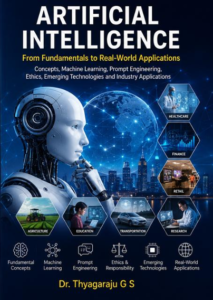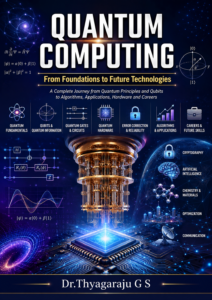

In the rapidly evolving landscape of intelligent systems, two transformative paradigms—Agentic Artificial Intelligence (Agentic AI) and Quantum Artificial Intelligence (Quantum AI)—are emerging as complementary forces. Agentic AI brings autonomous, goal-driven behavior inspired by human-like reasoning, while Quantum AI harnesses the computational power of quantum mechanics to transcend classical computational limits. When integrated, these two can enable real-time intelligent decision-making, adaptive problem-solving, and scalable optimization in domains ranging from healthcare and finance to climate modeling and autonomous systems. This article explores the conceptual foundations, integration mechanisms, architecture, and practical applications of Agentic-Quantum AI synergy.
1. Introduction
The next evolution of Artificial Intelligence lies in systems that are not merely reactive but autonomous, context-aware, and capable of reasoning in uncertain environments—known as Agentic AI. Simultaneously, Quantum AI promises unprecedented computational capabilities by leveraging the principles of superposition, entanglement, and interference inherent to quantum mechanics.
While classical AI models struggle with combinatorial explosion and uncertainty in real-time scenarios, Quantum AI accelerates computation and learning, and Agentic AI provides the reasoning, adaptability, and autonomy required for intelligent action. The integration of these paradigms offers a pathway to truly cognitive, decision-making systems capable of operating in real-world dynamic environments.
2. Understanding Agentic AI
Agentic AI refers to AI systems that possess:
- Autonomy: The ability to perceive, plan, and act independently.
- Goal Orientation: Operates based on defined objectives or emergent goals.
- Reactivity: Responds to environmental changes in real time.
- Proactiveness: Anticipates and acts before external triggers occur.
- Social Ability: Interacts with other agents or humans collaboratively.
Agentic AI systems can be represented as intelligent agents with architectures such as:
- Reactive Agents (Reflex-based)
- Deliberative Agents (Belief-Desire-Intention or BDI)
- Hybrid Agents (combining reflexive and planning layers)
These agents can plan, adapt, and learn dynamically using reinforcement learning, large language models (LLMs), and symbolic reasoning.
3. Understanding Quantum AI
Quantum AI is the fusion of quantum computing principles with artificial intelligence techniques. It leverages:
- Quantum Superposition: To explore multiple solutions simultaneously.
- Quantum Entanglement: For correlated decision-making across distributed systems.
- Quantum Parallelism: To process vast state spaces in parallel.
- Quantum Measurement: To probabilistically collapse to optimal outcomes.
Quantum algorithms like Grover’s Search, Quantum Support Vector Machines (QSVM), and Quantum Approximate Optimization Algorithm (QAOA) enhance classical AI models by accelerating search, optimization, and learning tasks.
4. Integration Framework: Agentic Quantum AI (A-QAI)
The integration of Agentic AI and Quantum AI creates a new paradigm—Agentic Quantum AI (A-QAI)—capable of perception, cognition, and decision at both symbolic and sub-symbolic levels.
4.1 Conceptual Architecture
| Layer | Function | AI Role | Quantum Role |
|---|---|---|---|
| Perception Layer | Collects sensory/environmental data | Cognitive sensing using AI vision/NLP | Quantum feature encoding & preprocessing |
| Reasoning Layer | Decision-making, planning, strategy | Agentic reasoning & goal management | Quantum inference & probabilistic reasoning |
| Learning Layer | Model improvement | Reinforcement and continual learning | Quantum machine learning (QML) for faster convergence |
| Execution Layer | Real-time actuation | Agent executes actions in environment | Quantum optimization for minimal action cost |
| Feedback Layer | Continuous adaptation | Evaluates performance | Quantum-enhanced evaluation and re-calibration |
4.2 Workflow Example
- Sensing: Agent perceives environment via sensors or data streams.
- Encoding: Data is encoded into quantum states for processing.
- Computation: Quantum AI subsystem performs fast learning/optimization.
- Reasoning: Agentic AI uses outputs for planning and action selection.
- Actuation: Agent performs real-world actions and observes effects.
- Learning Loop: Feedback refines both classical and quantum models in real-time.
5. Real-Time Problem-Solving Applications
5.1 Smart Grid Energy Optimization
Problem: Balancing energy demand and renewable energy supply in real time.
Agentic Role: Autonomous agents monitor consumption, predict demand, and negotiate load balancing.
Quantum Role: Quantum AI optimizes power distribution using quantum annealing and QAOA to minimize losses.
Outcome: Near-instantaneous optimization of grid load and stability across cities.
5.2 Financial Portfolio Management
Problem: Real-time trading under uncertain market conditions.
Agentic Role: AI agents execute autonomous trading strategies using reinforcement learning.
Quantum Role: Quantum AI solves multi-asset portfolio optimization in milliseconds, evaluating risk-return profiles faster than classical models.
Outcome: Enhanced profitability, reduced volatility, and adaptive investment decisions.
5.3 Personalized Healthcare Diagnostics
Problem: Rapid, personalized diagnosis using complex genomic and clinical data.
Agentic Role: Patient-specific AI agents interact with doctors, gather data, and recommend treatment paths.
Quantum Role: Quantum machine learning models analyze genetic patterns for disease prediction.
Outcome: Real-time adaptive diagnosis and precision medicine recommendations.
5.4 Autonomous Vehicles and Drones
Problem: Real-time navigation and obstacle avoidance in dynamic environments.
Agentic Role: Multi-agent coordination for route selection, swarm behavior, and safety control.
Quantum Role: Quantum AI accelerates pathfinding and optimization of routes with quantum-enhanced graph search.
Outcome: High-speed, collision-free decision-making in complex terrains.
5.5 Climate Simulation and Disaster Response
Problem: Predicting climate shifts and coordinating emergency responses.
Agentic Role: Distributed AI agents manage logistics, rescue, and coordination.
Quantum Role: Quantum AI simulates nonlinear environmental dynamics for predictive modeling.
Outcome: Accurate forecasting and proactive disaster mitigation.
6. Advantages of Agentic-Quantum Integration
| Advantage | Description |
|---|---|
| Speed and Scale | Quantum computation accelerates AI decision processes. |
| Autonomy | Agentic reasoning enables real-time goal-directed behavior. |
| Adaptivity | Combined learning models evolve with dynamic environments. |
| Parallelism | Quantum processing handles multiple scenarios concurrently. |
| Efficiency | Optimal use of energy and computation for sustainability. |
| Security | Quantum cryptography enhances agent communication security. |
7. Challenges and Future Directions
7.1 Technical Challenges
- Quantum hardware scalability and noise reduction.
- Integrating quantum processors with classical AI infrastructures.
- Designing interpretable quantum-agentic decision systems.
7.2 Ethical and Societal Concerns
- Ensuring transparency in autonomous decision-making.
- Preventing misuse of quantum-powered agents.
- Maintaining human oversight in critical applications.
7.3 Future Outlook
- Agentic Quantum Cloud Systems for distributed computation.
- Quantum-Aware Reinforcement Learning Agents for real-time adaptation.
- Human-AI-Quantum Hybrid Ecosystems for co-intelligent problem-solving.
8. Conclusion
The convergence of Agentic AI and Quantum AI marks the dawn of a new computational intelligence era. While Agentic AI provides autonomy, context, and reasoning, Quantum AI delivers computational power beyond classical limits. Together, they form self-evolving, real-time intelligent ecosystems capable of addressing humanity’s most complex challenges — from global sustainability to personalized medicine.
In essence, Agentic Quantum AI represents the next frontier — where reason meets reality at quantum speed.