Protected: The Future of Human Intelligence in the Age of AI: Why Logic Alone Is No Longer Enough
There is no excerpt because this is a protected post.

Protected: If AI Takes Over All Jobs, What Will Be the Future of Job Opportunities?
There is no excerpt because this is a protected post.

The Future of Computer Engineering Education: AI-Enabled Computer Science
Computer Science and Engineering is entering one of the most significant transformations in its history.
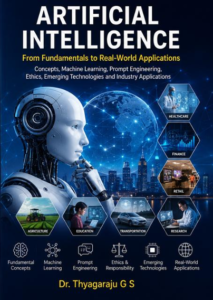
For decades, Computer Science education focused on programming, algorithms, data structures, operating systems, databases, computer networks, software engineering and computer architecture. These fundamentals remain essential. However, the nature of computing has changed dramatically with the emergence of Artificial Intelligence (AI), Machine Learning (ML), Generative AI, Large Language Models, intelligent agents, robotics and autonomous systems.
The important question today is not: “Should a student study Computer Science or Artificial Intelligence?”
The more relevant question is: “How can Computer Science education become AI-enabled so that a Computer Science graduate can work across every major computing domain?”
This is where the concept of AI-Enabled Computer Science (AI-enabled CSE) becomes powerful.
From Gen X to Gen Beta: The Evolution of Generations and Their Global Impact
Every generation grows up under a different combination of technology, economy, culture, education, family structures and global events. These experiences influence how people think, communicate, learn, work, consume, lead and respond to change.
Generational labels such as Gen X, Millennials, Gen Z, Gen Alpha and Gen Beta are useful for understanding broad social trends, but they should not be treated as rigid scientific categories. Even Pew Research Center cautions that generational boundaries are analytical tools rather than absolute divisions.
The fascinating story is therefore not simply about different age groups. It is about humanity’s transition from an industrial and information society toward a digital, intelligent and increasingly AI-mediated society
AI-Enabled Campus: Transforming the Future of Education
Artificial Intelligence (AI) is no longer a futuristic concept—it is a transformative force reshaping how educational institutions operate, teach, and innovate. An AI-enabled campus integrates intelligent technologies into academic, administrative, and operational processes to create a smart, connected, and adaptive learning ecosystem.
In today’s rapidly evolving digital landscape, campuses that embrace AI are not only enhancing learning experiences but also preparing students for an AI-driven world.