The Dirac formulation of Quantum Mechanics, developed by Paul Adrien Maurice Dirac in the late 1920s, is one of the most elegant and powerful mathematical frameworks in modern physics. It unifies earlier quantum ideas using a compact, abstract language based on linear algebra and Hilbert spaces. Dirac’s formulation provides the foundation for quantum theory, quantum computing, and quantum field theory, and it remains the standard notation used by physicists today.
1. Motivation for Dirac’s Formulation
Before Dirac, Heisenberg’s matrix mechanics and Schrödinger’s wave mechanics offered different mathematical pictures of quantum systems. Although both were correct, they appeared unrelated. Dirac introduced a general, abstract formulation that:
- Unified wave and matrix mechanics
- Described states and observables using vectors and operators
- Introduced a universal notation that applies to all quantum systems
This abstraction removed unnecessary mathematical complications and clarified the core structure of quantum theory.
2. States in Dirac Formalism: Ket and Bra Vectors
Dirac introduced the famous bra–ket notation:
- A quantum state is written as a ket: ∣ψ⟩
- Its dual (complex conjugate transpose) is a bra: ⟨ψ∣
- The inner product gives a probability amplitude: ⟨ϕ∣ψ⟩
- The outer product forms operators: ∣ϕ⟩⟨ψ∣
This notation made quantum mechanics simple, flexible, and consistent with Hilbert space theory.
3. Observables as Operators
In Dirac’s theory:
- Every observable (such as position, momentum, or energy) corresponds to a Hermitian operator A^
- Measurement outcomes are eigenvalues of the operator:

- The state ∣ψ⟩|\psi\rangle∣ψ⟩ collapses to the corresponding eigenstate after measurement
- Expectation value (average outcome of repeated measurements) is:

4. Time Evolution of Quantum States
Dirac generalized the time evolution using the Schrödinger equation in operator form:

where H^ is the Hamiltonian operator. This describes how a state changes in time.
5. Superposition and Completeness
The Dirac formalism naturally incorporates the superposition principle:

The coefficients ci are probability amplitudes. The completeness relation is written as:

This is the mathematical expression of the idea that a quantum state can be expanded in any complete basis.
6. Commutators and Uncertainty Principle
Dirac showed that quantum commutation rules naturally lead to uncertainty relations. For operators A^ and B^:

For position and momentum:

This directly gives rise to the Heisenberg Uncertainty Principle.
7. Significance of Dirac’s Formulation
Dirac’s approach is important because it:
| Contribution | Impact |
|---|---|
| Unified matrix + wave mechanics | Gave a universal quantum framework |
| Introduced bra–ket notation | Simplified quantum expressions |
| Enabled quantum field theory | Basis for particle physics |
| Works for finite and infinite-dimensional systems | Very general and flexible |
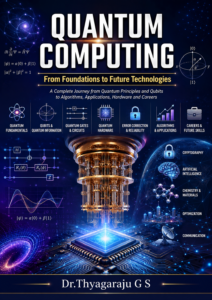
| Essential for quantum computing | Qubits are expressed as kets |
8. Conclusion
The Dirac formulation of Quantum Mechanics is a mathematically elegant and conceptually powerful framework that reveals the true structure of quantum theory. By representing states as vectors and observables as operators, Dirac created a universal language that is still used to describe atoms, molecules, qubits, and fundamental particles. His formalism remains central to both theoretical physics and modern quantum technologies.