Synthetic Artificial Intelligence
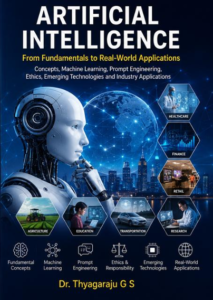
The term Synthetic Artificial Intelligence (SI) is emerging as a transformative concept that extends beyond traditional Artificial Intelligence (AI).
While AI systems simulate aspects of human cognition using data-driven learning models, Synthetic AI aims to construct intelligence as an independent and self-evolving entity — a synthesis of perception, cognition, and action generated by machines themselves.
In simple terms, AI imitates human intelligence, whereas Synthetic AI creates its own version of intelligence. It represents a paradigm shift from learning from data to creating both data and intelligence.
Integrating Agentic AI and Quantum AI for Real-Time Problem Solutions
In the rapidly evolving landscape of intelligent systems, two transformative paradigms—Agentic Artificial Intelligence (Agentic AI) and Quantum Artificial Intelligence (Quantum AI)—are emerging as complementary forces. Agentic AI brings autonomous, goal-driven behavior inspired by human-like reasoning, while Quantum AI harnesses the computational power of quantum mechanics to transcend classical computational limits. When integrated, these two can enable real-time intelligent decision-making, adaptive problem-solving, and scalable optimization in domains ranging from healthcare and finance to climate modeling and autonomous systems. This article explores the conceptual foundations, integration mechanisms, architecture, and practical applications of Agentic-Quantum AI synergy.
Open Source Quantum Computing Frameworks: A Learner’s Guide
Quantum computing is rapidly evolving from a scientific concept to a programmable reality, thanks to open-source software frameworks. These tools allow anyone—from students to researchers—to build, simulate, and execute quantum algorithms without owning a quantum computer.
This guide introduces learners to the most important frameworks, explains why open source matters, and highlights the challenges and opportunities shaping the field’s future.
What is Quantum Computing?
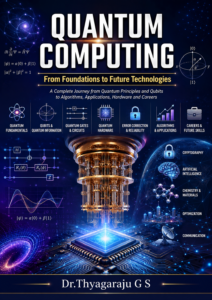
Quantum computing represents a fusion of physics, mathematics, and computer science, offering a fundamentally different approach to processing information. While classical computers use bits that exist in one of two states—0 or 1—quantum computers use quantum bits (qubits) that can exist in multiple states simultaneously. This capacity to explore a vast computational space concurrently makes quantum computing a powerful tool for solving complex problems in optimization, cryptography, materials science, and artificial intelligence.
Classical vs Quantum Computing
For over half a century, classical computers have been the backbone of human progress — driving scientific discovery, communication, and automation. Built on the foundation of binary logic, these machines process information using bits, which can be in one of two states: 0 or 1.
However, as problems grow more complex and data sets larger, classical computing approaches reach physical and practical limits. Enter quantum computing, a revolutionary paradigm that leverages the laws of quantum mechanics to process information in ways unimaginable for classical systems.